
Contents
ToggleUltimate Search Engine Optimization Strategy Guide for Better Website Visibility
In an increasingly competitive digital landscape, businesses must do more than simply maintain an online presence-they must be discoverable Search Engine Optimization (SEO) is a strategic digital marketing practice that enhances a digital marketing practice that enhances a website’s visibility on search engines, enabling organizations to connect with their target audience effectively and organically.

Best SEO Optimization Guide for Better Google Rankings
Search Engine Optimization (SEO) refers to the process of optimizing a website to improve its ranking in organic search engine results. By aligning website content, structure, and performance with search engine algorithms, Search Engine Optimization helps ensure that a website appears prominently when users search for relevant information, products, or services.
Search Engine Optimization (SEO) is the process of improving a website to increase its visibility in search engine results pages (SERPs) like Google, Bing, and Yahoo. The main goal of SEO is to attract more organic (non-paid) traffic by ranking higher for relevant keywords that users search online.
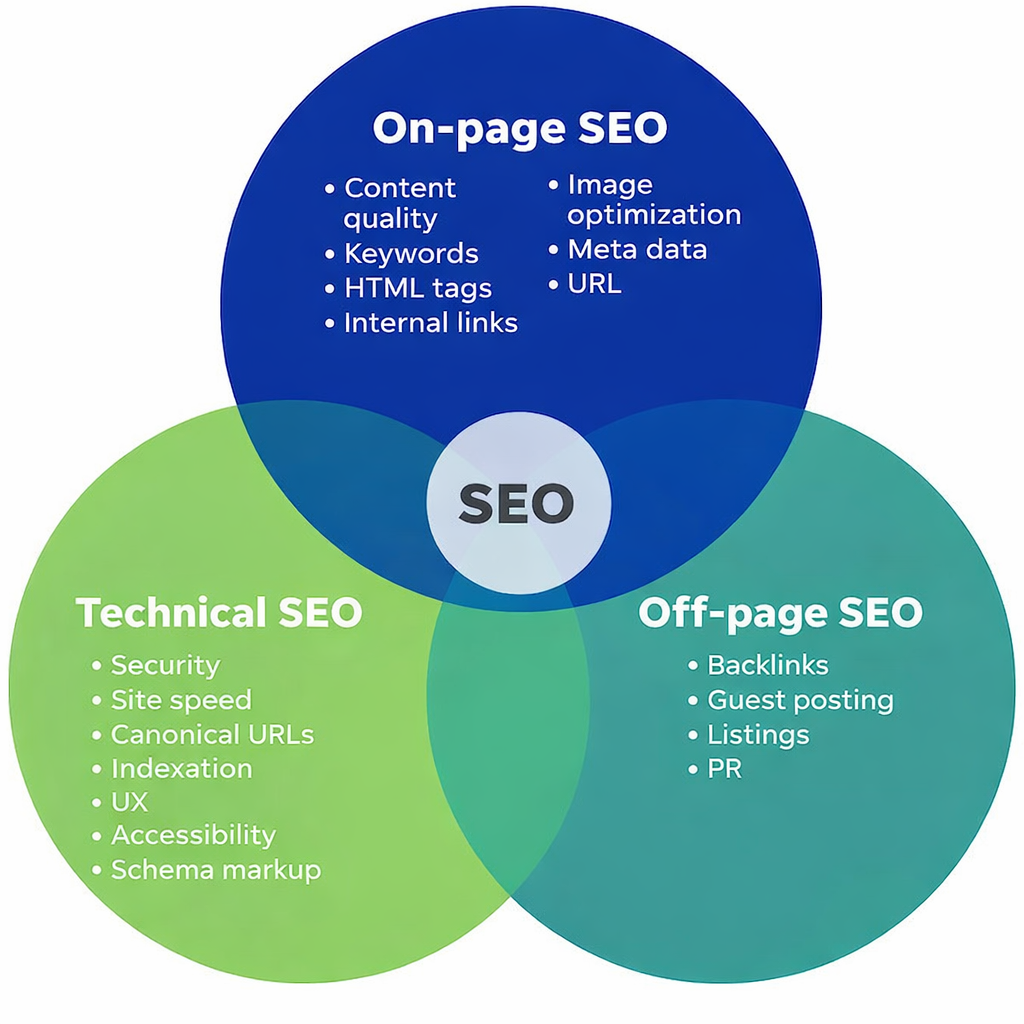
Search Engine Optimization involves optimizing website content, structure, and technical aspects to make it easier for search engines to understand and index the site. It includes three main areas:
On-Page SEO – Optimizing content, keywords, meta tags, headings, and images.
Off-Page SEO – Building backlinks and improving website authority.
Technical SEO – Enhancing website speed, mobile-friendliness, and security.
In simple terms, Search Engine Optimization helps businesses improve online visibility, reach their target audience, and achieve long-term digital growth without relying only on paid advertising.
Why SEO is Essential
Search Engine Optimization plays a critical role in long-term digital success. Unlike paid advertising, SEO delivers sustainable results by continuously attracting qualified traffic.
Key benefits of SEO include:
- Enhanced online visibility and brand authority
- Increased organic and high-intent traffic
- Improved user experience and site usability
- Higher credibility and trust among users
- Cost-effective and measurable growth
A strong SEO strategy supports business objectives by driving consistent and relevant website engagement.
Core Components of SEO
Top 5 Essential SEO Elements
- Keywords: Data-driven terms aligned with user intent.
- Content: Authoritative, informative, and original.
- Backlinks: Quality inbound links from trusted sources.
- User Experience (UX): Seamless navigation and accessibility.
- Performance Analysis: Continuous monitoring and optimization.
SEO Best Practices for Sustainable Results
- Focus on user intent rather than keyword stuffing.
- Publish consistent, high-value content.
- Optimize for mobile-first indexing.
- Improve site speed and performance.
- Monitor analytics and refine strategies regularly.
Types of SEO
On-Page SEO refers to the process of optimizing individual web pages to improve their search engine rankings and attract more organic traffic. It focuses on optimizing both the content and HTML source code of a webpage.
Key elements of On-Page SEO include:
Keyword optimization in titles, headings, and content
Meta title and meta description optimization
Proper use of header tags (H1, H2, H3)
Internal linking
Image optimization with alt text
Creating high-quality, relevant content
Improving URL structure
On-Page SEO helps search engines understand the content of a page and ensures a better user experience, leading to higher rankings and increased website traffic.
Off-Page SEO refers to the activities performed outside your website to improve its search engine rankings and online authority. It focuses on building trust, credibility, and popularity for your website.
The main element of Off-Page SEO is backlink building, which means getting links from other reputable websites to your site. High-quality backlinks signal to search engines that your content is valuable and trustworthy.
Other important Off-Page SEO techniques include:
Social media marketing
Guest posting
Influencer outreach
Brand mentions
Directory submissions
Forum participation
In simple terms, Off-Page SEO helps increase your website’s authority and reputation, which improves ranking and drives more organic traffic.
Technical SEO refers to the process of optimizing the technical aspects of a website to help search engines crawl, index, and rank it effectively. It focuses on improving the website’s backend structure and performance.
Key elements of Technical SEO include:
Website speed optimization
Mobile-friendliness
Secure website (HTTPS)
XML sitemap
Robots.txt file
Fixing crawl errors
Structured data (Schema markup)
Proper URL structure
Improving Core Web Vitals
Technical SEO ensures that search engines can easily access and understand your website, while also providing a smooth user experience. Without strong technical SEO, even high-quality content may not rank well.
Search Engine Optimization (SEO) is one of the most important strategies in digital marketing for improving a website’s visibility on search engines like Google, Bing, and Yahoo. It focuses on optimizing website content, structure, and authority to rank higher in organic (non-paid) search results. SEO is not just about ranking; it is about attracting the right audience, improving user experience, and driving meaningful engagement.
SEO consists of three main pillars: On-Page SEO, Off-Page SEO, and Technical SEO. On-page SEO involves optimizing content, keywords, meta tags, headings, internal links, and images to make pages relevant and user-friendly. Off-page SEO focuses on building website authority through backlinks, social signals, and brand mentions. Technical SEO ensures that a website is fast, mobile-friendly, secure, and easy for search engines to crawl and index.
One of the biggest advantages of SEO is that it provides long-term and cost-effective results. Unlike paid advertising, which stops generating traffic once the budget ends, SEO continues to drive organic traffic over time. It also builds trust and credibility because users tend to trust websites that appear naturally on the first page of search results.
Moreover, SEO helps businesses understand their target audience better through keyword research and analytics. It improves website usability, enhances customer experience, and increases conversion opportunities. In today’s competitive digital environment, SEO is not optional—it is essential for sustainable business growth.
In conclusion, SEO is a continuous and strategic process that strengthens online presence, increases brand awareness, and delivers long-term business success.
Pingback: What is Digital marketing
Pingback: On Page SEO Checklist
Pingback: Off Page SEO
Pingback: Technical SEO
Pingback: Difference Between SEO and SEM
Pingback: On-Page SEO – muhammedmishab.com
Pingback: SEO - muhammedmishab.com
Pingback: Search Engine Optimization